

Taxing Elements

At the risk of being called a conspiracy theorist, I want to test a theory and get your feedback on a prediction.
One of government’s tasks is to keep people safe from others under the law. Eventually that expanded to address other dangers. One example: ban lead in gasoline. Lead, specifically Tetra-Ethyl Lead was ultimately phased out from gasoline, and anti-knocking was addressed, amongst other, by refining to higher octane levels. Surely, regulations were required to address the negative side effects of Mercury, Cadmium and Sulfur.
But over the last few decades it appears that most western governments have decided that their population needs continued help to minimize risk and danger. In addition to nudging, an added benefit of more regulations is that government can assign itself a fee for all the good it is doing.
For some organizations like Greenpeace, regulation does not go far enough. They once tried to ban the element chlorine, calling it the Devil’s Element. While concentrated bleach requires careful handling, a diluted form used as a disinfectant saves lives. But in bans, there is no room for nuance: effects are one-directional, there is only a single solution, and there are no trade-offs.
Key to regulate an element or compound is that it has some negative (side) effect, that the substance is ubiquitous and used by almost everyone. Ideally, people need it for everything they do.
That has been the playbook for the re-classification of carbon, the element of life, as a pollutant. Clearly, with 6 protons, 6 neutron and 6 electrons, carbon qualifies as the Devil’s Element. Government has tax'ed carbon and redistributed $trillions toward so-called “green”, unreliable, weather-dependent and more expensive energy sources and has often offshored manufacturing to hide their “pollution” on foreign balance sheets. But now it seems there is more pushback, and that recent bets on carbon taxation are not as winning as they used to be.
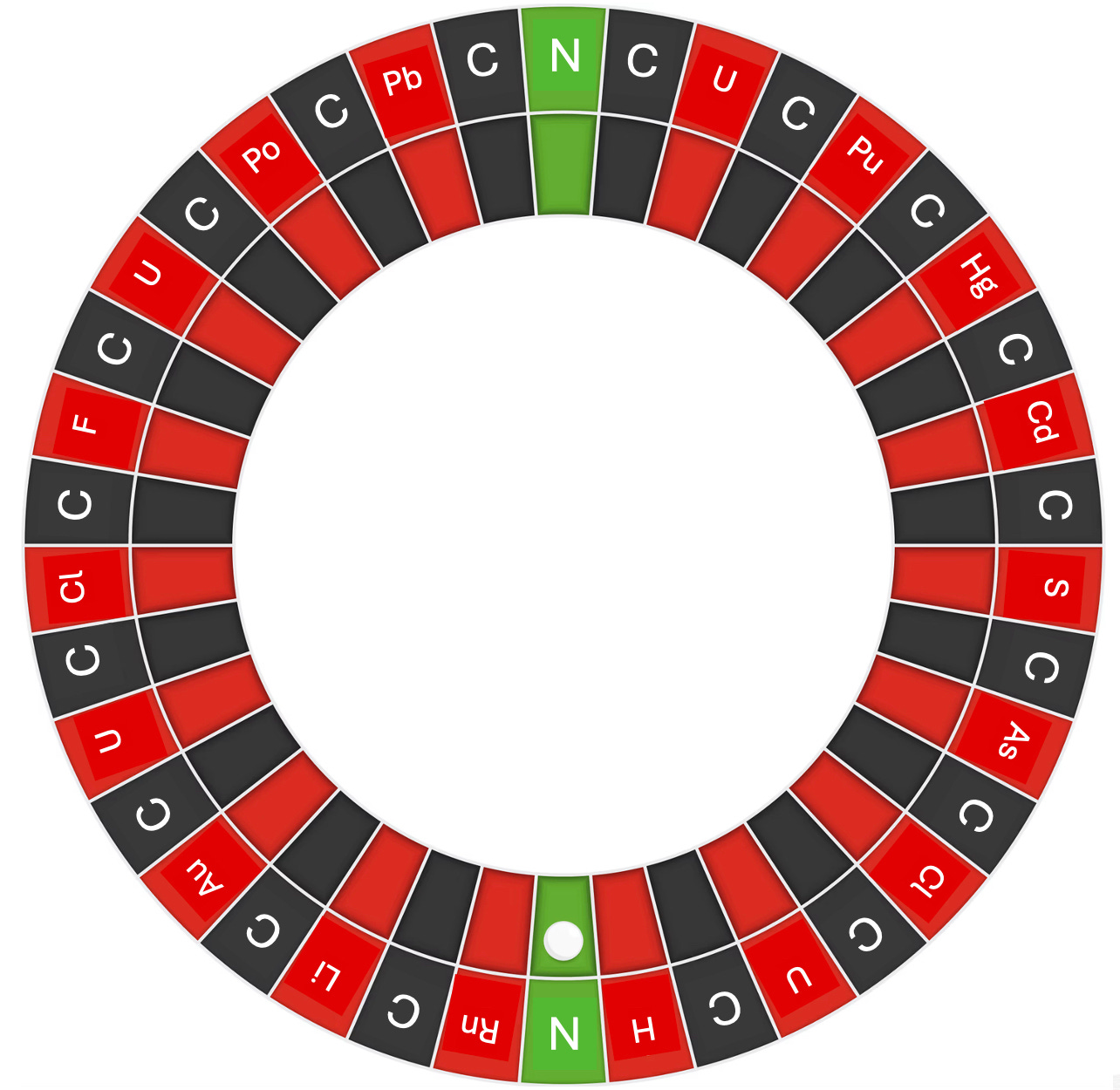
Not a problem at all! There is always another element in the bullpen. Rien ne va plus! And the new winner is….Nitrogen.
My native country has already experimented, albeit as a "temporary" government program, with a Secretary of Nature and Nitrogen. What do you make of tighter government control on an element that helps produce half our food? How did that go for Sri Lanka? Are our governments playing Elemental Roulette?
Over regulation to the point of stupidity. 20 years ago someone blew up their basement garage here in Georgia. So the “fix” was to no longer allow “boat” garage doors on a walkout basement. Not sure what that created besides a bunch of headaches. 100% of the HVAC guys I know all use battery powered tools, yet it’s mandatory to put an outlet near the outside unit and the air handler inside so it’s easy to plug a tool in. Gas cans used to let gas flow out when you poured, now you have to pull a safety feature to spill it while you pour it in to something. Far from hypocrisy, you’re pointing out a few of the major overreaching rules in today’s world. No government should or can be a supervisor to individual responsibility and basic knowledge of safe practices and common sense.
Government regulations are an anathema to liberty. The bureaucracy always thinks they are smarter and knows what is best. Legislators abdicate their responsibility and pass it along to the faceless bureaucrats. The attempt to regulate the most common element in our air is ridiculous. There. You have my opinion. So.