

Electrify Everything Anxiety

Bike Anxiety
I should have known when I executed the sale last summer. I was very excited, and I was in a bind. I needed something now. But I had this strange feeling lingering in my mind that this was going to bite me.
I bought a new road bike. The bike is incredible with a carbon fiber frame, wider wheels and tires for more comfort and speed, and a wide range of gears - that are operated through electronic shifting.
Excuse my whining about a first world problem tied to this new shifting mechanism: battery anxiety. It came to a head on a cold Denver day. I like biking outdoors, and I don’t mind it if temperatures are near freezing. My Prima Donna batteries, however, did mind.
The culprits, shown in the red boxes of the photo below, are two 3.7 Wh lithium ion batteries that weigh less than an ounce and that are each good for 2,000 gear shifts. The derailleur battery uses about 0.002 Wh/shift, or maybe 0.1 Wh per ride. That compares to 200 Wh of work by my legs for a modest-effort 2-hour ride - or about 2,000x more work from legs as opposed to my shifting index finger.
Without these batteries, I would still be able to bike, but the Denver terrain requires frequent gear changes. I could walk uphill instead. I could not pedal downhill. But the whole biking experience just got a lot more awkward and inefficient. Why make the biker a hostage to such tiny replacement power? Does someone on the design team seriously think power in my shifting index finger needs to be saved?
The problem is entirely self-made. I bought into an expensive, unreliable, silly dependency through my own ignorant choices. And I am not alone - this first world problem is also pestering many - mostly developed - countries.
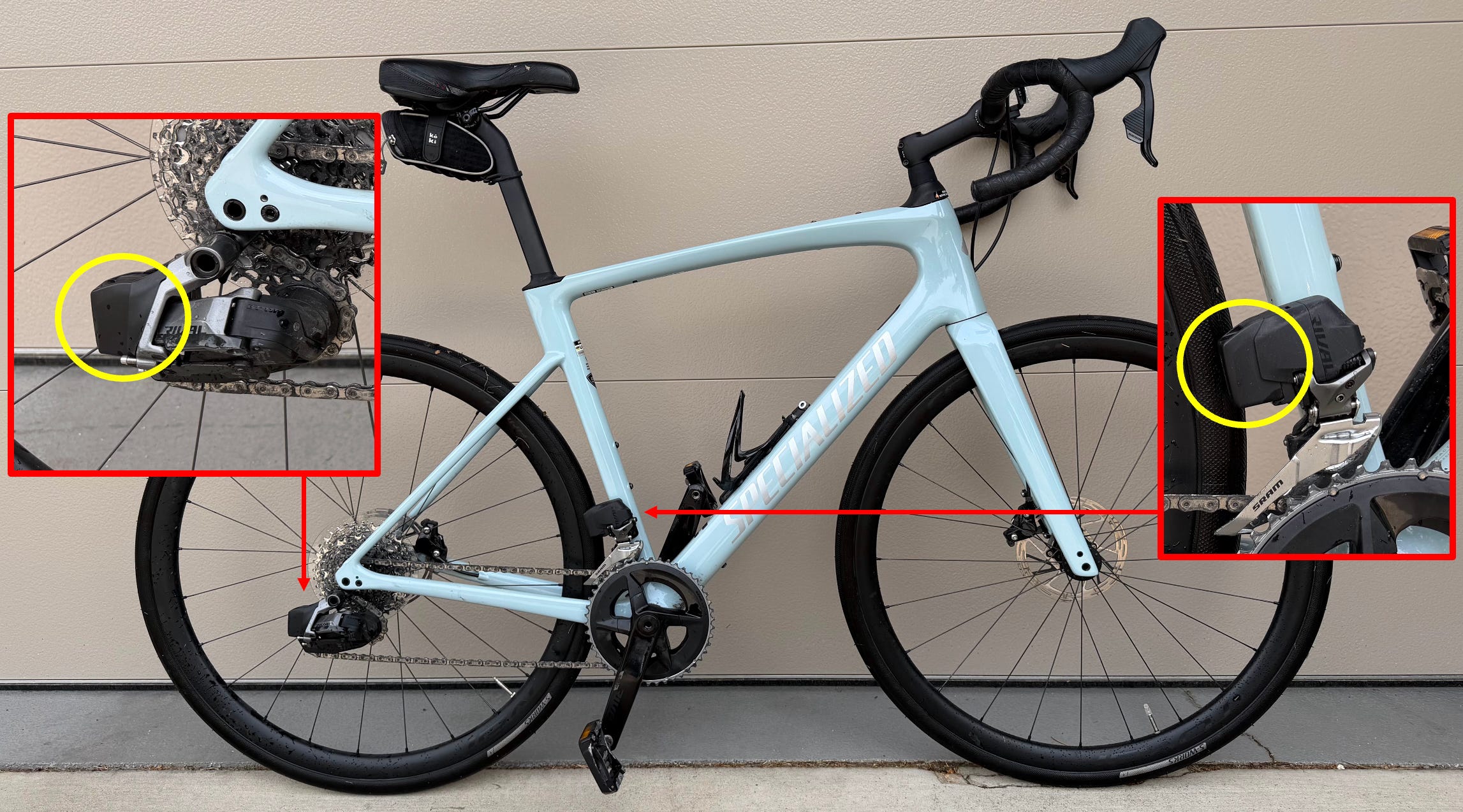
Figure 1: Photo of the source of my recent anxiety
Beneficial Electrification
The goal of “electrifying everything” runs deep, aiming for possible benefits of higher energy transfer efficiency, lower carbon emissions, energy independence and lower prices.
“Beneficial electrification” is a term introduced by Keith Dennis, a Director of the Beneficial Electrification League, and states that electricity to end-users must satisfy at least one of the below conditions without negatively impacting the others:
Saves consumers money
Benefits the environment (and some include a reduction of greenhouse gasses)
Improves product quality or consumer quality of life
Creates a more robust or resilient grid
My gear shift battery experience negatively affected three of these four conditions, while the grid issue did not apply. So that is not exactly beneficial electrification.
Today’s drive to electrification is also often not “beneficial” in the strict meaning of the definition, where the word “without” is key - “without negatively impacting the others”. Greenhouse gas reductions are often set as the main goal of the “energy transition”. Assuming the desired greenhouse gas reduction is actually achieved (which can be a challenge when evaluating lifetime impact), we often see that consumers pay more, that a product is not improving their quality of life, and/or that the grid actually becomes more prone to disruptions.
In this article we will focus on what drives electrification and what drives electricity prices for various countries around the world.
On average for all countries around the world, electricity represents about 17% of all primary energy we consume (the left side of Figure 2), or about 27% of all useful energy (the top right side of Figure 2).
This relatively small role of electricity is clearly shown by the IEA Sankey diagram for European power. Europe has the highest fraction of domestic renewable power - the three green lines on top left for hydro, biofuel & waste, and other renewable including wind & solar power). It has also been a champion for electrification. The Sankey diagram, however, shows that Europe mostly runs on imported oil and natural gas. Of all secondary power sources and remaining primary energy sources, electrification, shown in the middle in yellow, represents only 18% of primary energy. That is only 1% higher than the world average.
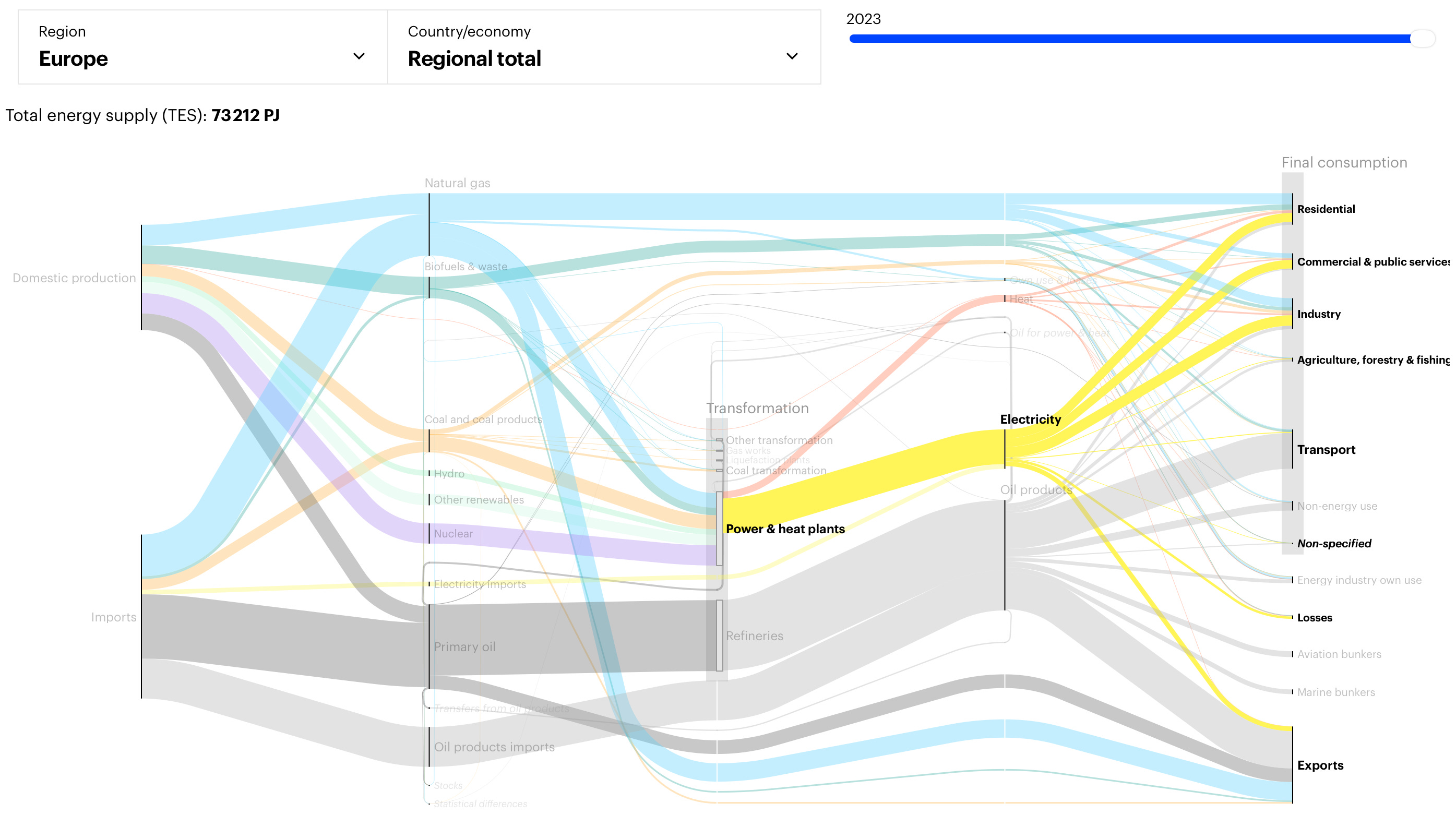
Figure 2: There is a lot left to be electrified, even in Europe.
The figure below shows electrification by country and by region. For readability (barely possible on the horizontal axis, sorry!), I have eliminated countries with fewer than 1 million people. Regions were created by the Energy Institute (EI), and this data comes from combining their electricity and primary energy databases. Electrification rates presented here are expressed as a percentage of primary energy.
While there is quite a bit of variation between countries, the regional averages are all very close, between 13% and 19%. While Europe is on the high side with 18%, the Central and South American average is slightly higher.
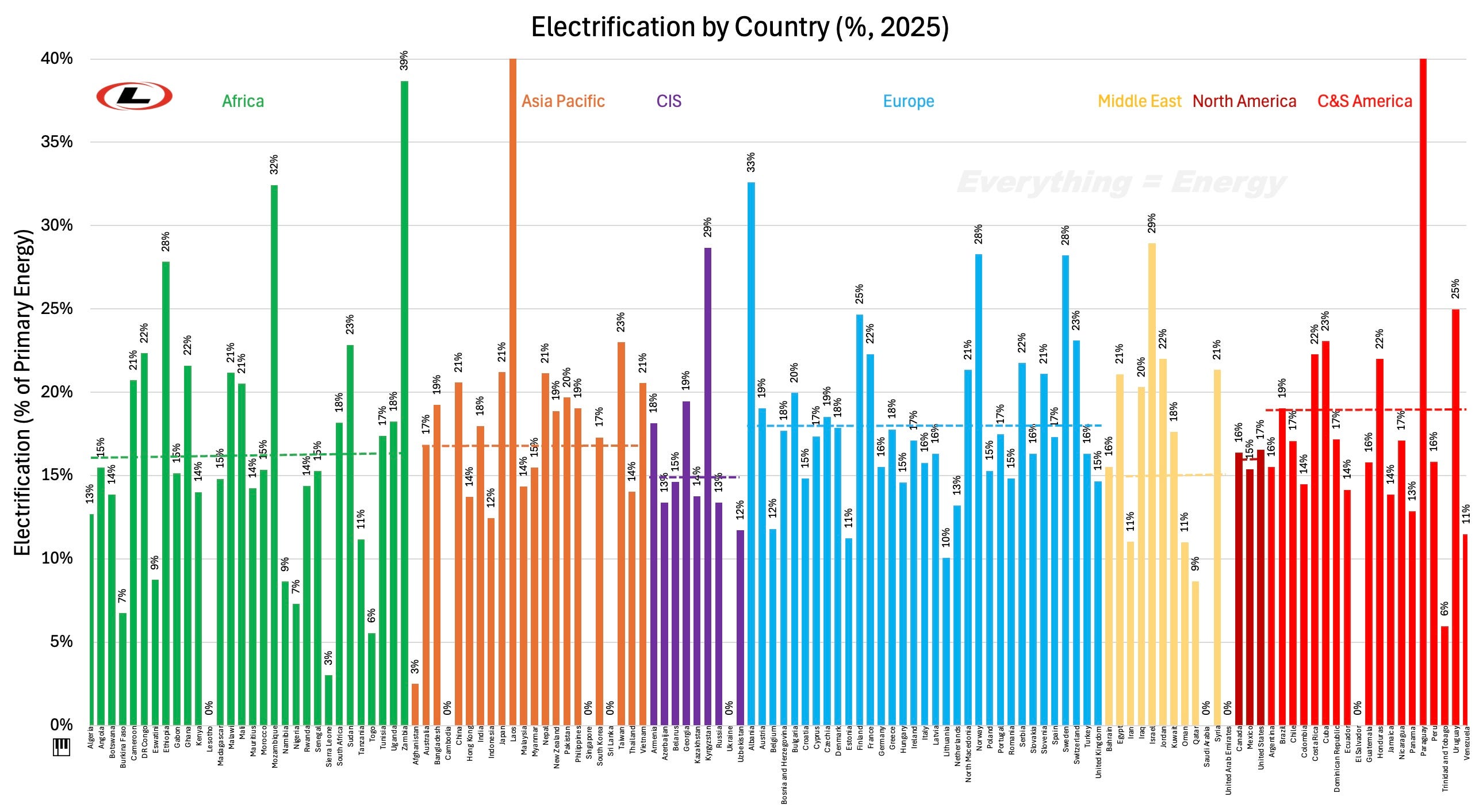
Figure 3: Electrification rates by country and region
Why is there such a difference in electrification rates between countries? Let’s try to break that down with a cross plot. The EI data also contains electricity generation by source, which is key toward an understanding electrification, and as we will see later, an understanding of residential electricity prices.
It appears that countries with more electricity-only sources have a tendency to lean more on them. If you have more of something you have an automatic tendency to use it more. Take France, with almost 70% of its electricity coming from nuclear power, for example - it sits near the European top electrification rate at 22%.
Another example are the massive hydro-electric dams in poor countries like Laos that also happen to have little other generation. Here, high electrification rates are a proxy for energy poverty beyond what hydro-electricity can provide.
Or think about countries that are pushing weather-dependent electricity-only sources like solar & wind power - such as renewable energy champions Denmark, Germany and the UK, who are sitting at 18%, 16% and 15% electrification rates, respectively. Ooops! These countries show that even after spending billions of euros and pounds on their grid and on subsidies for mostly weather-dependent sources, that electrifying everything is exceedingly hard, especially when you rely on the weather to get there.
The truth of the matter is that in Europe, countries with the highest electrification rates are indeed big on electricity-only sources, but they have a few incredible benefits few other countries have: big in land area; low population and low population density; massive amounts of rainwater and elevation change. Norway, Sweden and Finland are the top electrifiers in Europe at 25% and more of primary energy, and they all are huge in hydro-electric power generation. Yes, they are big in renewables, but I bet you hydro was not the renewable you were thinking of.
In the figure below, I plotted electrification rates against the combined percentage power generated from electricity-only hydro and nuclear. The bubble size is proportional to a country’s population.
While the correlation coefficient in the plot below is low, the trendline in the graph below appears to show that countries that rely 100% on nuclear and/or hydro and/or weather-dependent sources of electricity have a ~10% higher electrification rate than countries that do not have any hydro or nuclear.
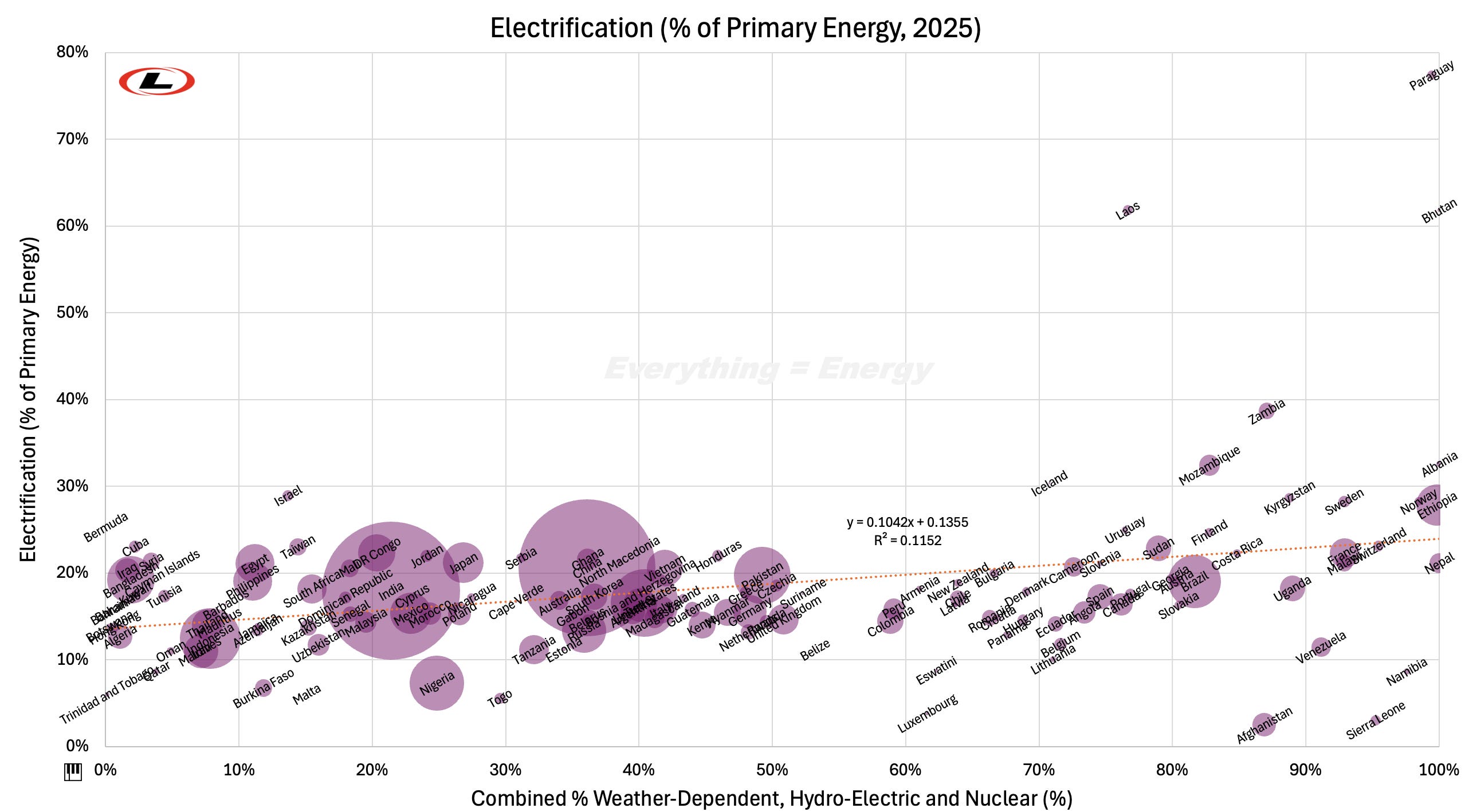
Figure 4: Electrification rate appears driven by penetration of hydro-electric and nuclear power sources on the grid
Europe First
It is clear where electricity is expensive if you plot on a map or by region, as I have done below in Figure 5. In Europe, an average kilo Watt-hour (kWh) costs $0.25, about double the cost in most other regions, 4x the cost in CIS and 5x the cost in the Middle East.
There are a few countries - Germany, the UK and Italy, where the cost of electricity is highest. It turns out that these are the countries where penetration of weather-dependent sources are amongst the highest in the world.
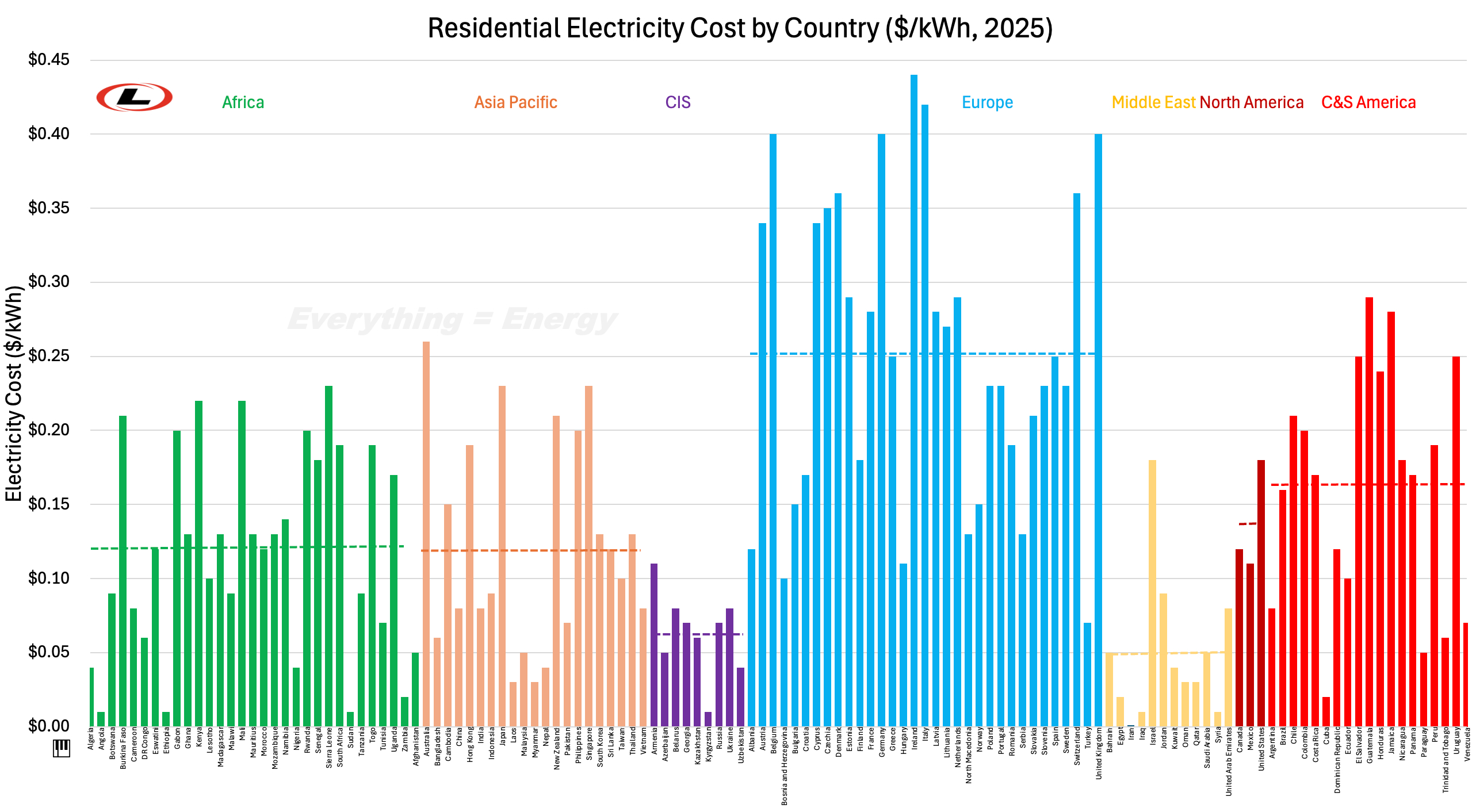
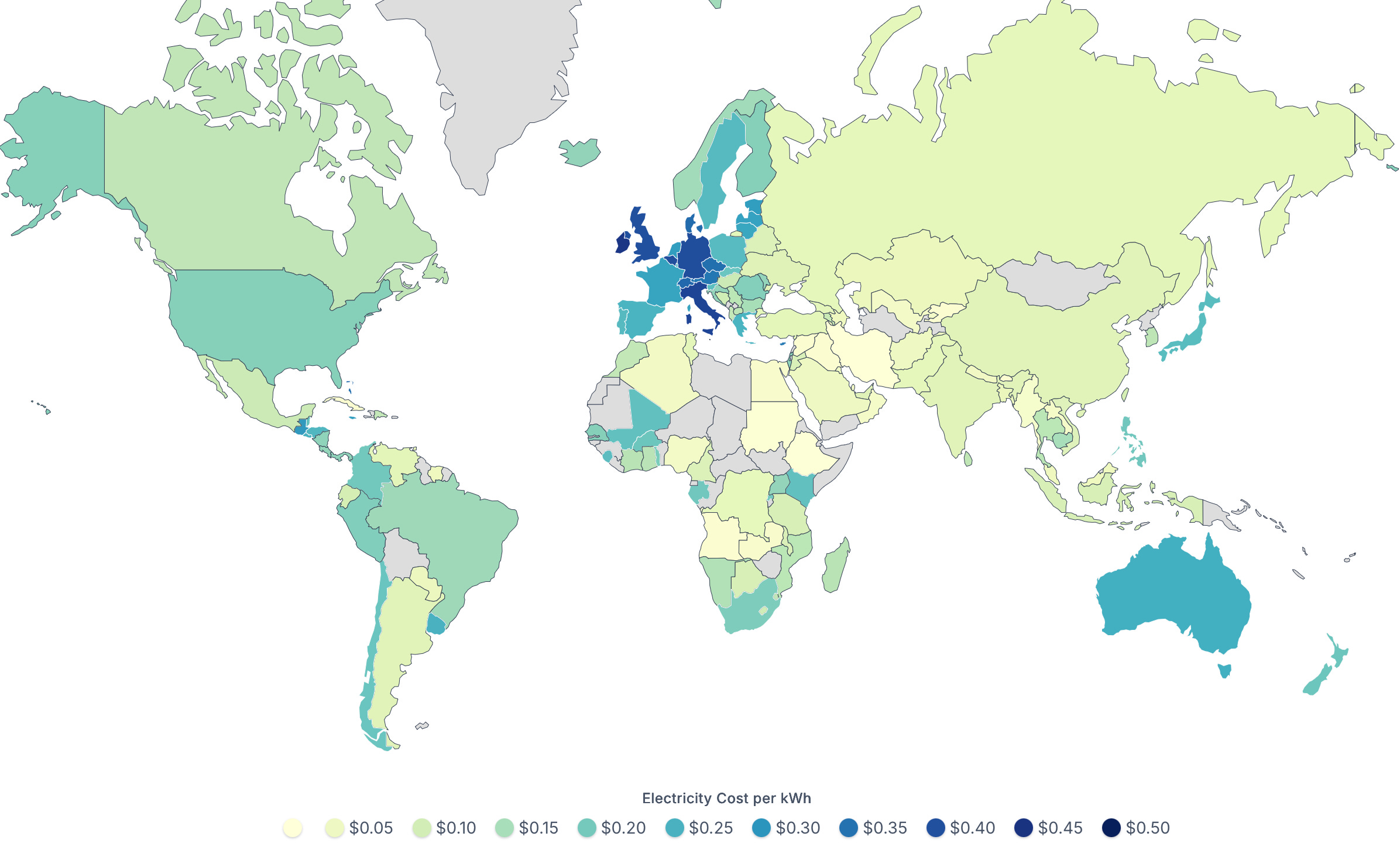
Figure 5: Electricity cost bar diagram and map taken from World Population Review
Beyond my bike battery blues, another potential microcosm for electrify everything may be what my countryman and past Formula 1 champion Max Verstappen is experiencing in his job this season. Instead of racing cars as fast as humanly possible, this maverick of spatial awareness and car control was reduced to a battery manager when the F1 organization demanded an increased level of electrification in their cars. The anxiety of running out of power is now very real for this pedals-down racer in the new F1 world of fabricated energy scarcity.
It shows that restrictions are a feature of electrifying everything, and that “beneficial electrification” is hard to achieve.
Full electrification is a pipe dream. Electrification of processes that require extreme heat, high power density, high energy-density fuels such as kerosene for aviation, diesel for maritime shipping, and heavy manufacturing (steel, cement, fertilizer and plastics) will continue to rely on fossil fuels not just for energy, but as raw chemicals, and will be impossible to electrify with current technologies.
Before that hard physical limit to further electrification lies a limit of deteriorating economics.
In the next half of this article, to be released next Sunday morning, I will dive into the drivers for high residential electricity prices.
Thanks for the charts in today's reading. And yeah... this season's F1 cars are the result of peak nut zero a few years ago. I'm so glad Max and others are shifting them back to real racing, but it will take years. Another battery where none was needed ruining us.
Thanks for breaking this down in easy to understand metrics. Electrify everything is certainly a pipe dream, but I also believe it is a massive security threat. Too much reliance on anything makes humans very vulnerable. I make this comparison with thermal electricity production. A lot of people think natural gas is the new saving grace, but it has risks too, especially a supply disruption. Whereas coal, while it’s not “as clean” the emissions can be debated later, can be stored on site and is largely protected from a supply disruption. Like so many things in our lives, the legacy media gets behind the narrative and pushes any propaganda in the direction of its controllers. I’m excited for next week. Thanks for taking time to share the truth and helping to inform people, even if it’s just a few people at a time. Hope you find a fix for your shifter dilemma, these first world problems can be frustrating.